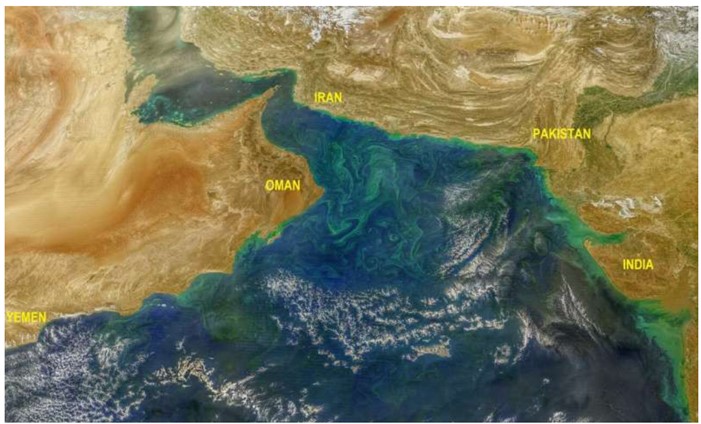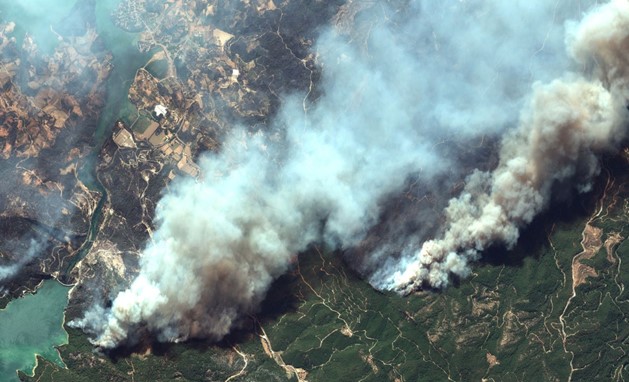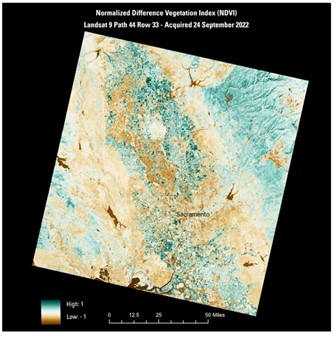

TripleSAT/DMC3 Constellation was successfully launched on July 10, 2015. It currently provides high-resolution satellite images with 0.8m panchromatic and 3.2m multispectral resolution.
The TripleSAT constellation consists of three identical optical Earth observation satellites capable of targeting any location on Earth once per day. The satellite images cover an area of 23.4 km. This satellite constellation is specifically designed for high-resolution remote sensing and observation applications.
Orbital Characteristics
Altitude: 651 km; three satellites evenly spaced at intervals of 120° in the same orbital plane
Period: 97.7 minutes
Inclination: 98.1°
Revisit Frequency: 45° off-nadir – daily
Imaging System
Spectral Bands:
Panchromatic
4-band multispectral (blue, green, red, and near-infrared [NIR])
Sensor Resolution:
Nadir – 0.8m panchromatic and 3.2m multispectral
25° off-nadir – 1m panchromatic and 4m multispectral
Spectral Band Wavelength Range: (in nm)
Panchromatic – 450 to 650
Blue – 440 to 510
Green – 510 to 590
Red – 600 to 670
NIR – 760 to 910
Dynamic Range: 10 bits
TripleSAT data can be used to identify and analyze approximately 100 different land cover features, ranging from human-made structures and surfaces to agricultural areas, water bodies, bare land and rocks, forests, and more.
Additionally, time-series imagery can be used to detect or monitor changes in areas for applications such as insurance, environmental regulation, among others. Surveillance and analysis for monitoring agriculture, precision farming, natural disasters, forest management, ocean and water monitoring, and land cover classification are ideal tasks for TripleSAT imagery, to name a few.
Satellite constellations like TripleSAT/DMC3 Constellation are designed to be used in various sectors worldwide and provide valuable data for these application areas. Such satellite constellations serve as essential tools for monitoring and understanding the Earth’s surface.
TripleSAT archive imagery can be easily queried through uydushop.com.tr.
For image acquisition, you can visit UyduShop.